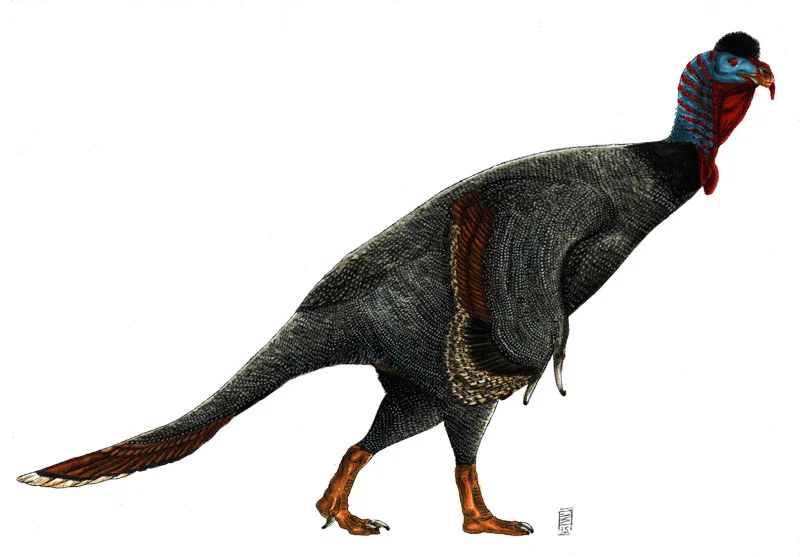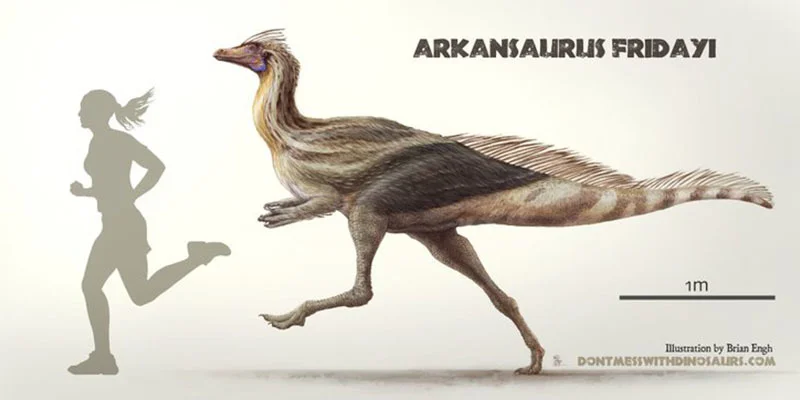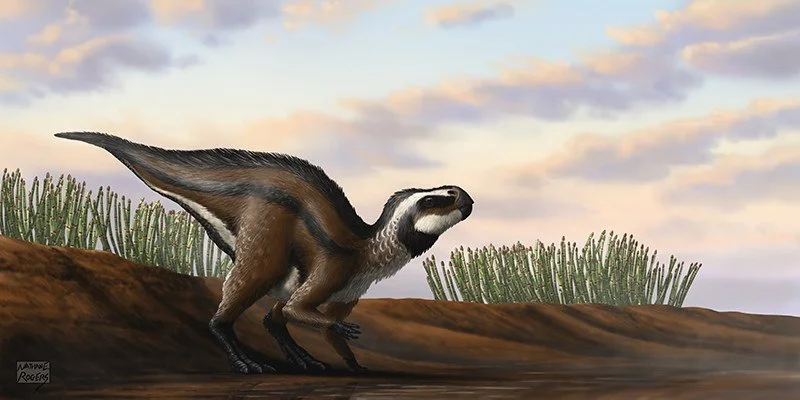

Some of these herbivorous theropods were small seed-eaters that survived the dinosaur extinction and gave rise to modern birds. But another, perhaps more remarkable group, were the strange and ungainly therizinosaurs.
The name Therizinosaur comes from the Greek for “scythe-lizard.” They were a group of theropods notable for their very long, blade-like claws shared by most of its members. They were a family of theropod dinosaurs from the Cretaceous Period that appeared around 130 million years ago and probably survived until the end of the Mesozoic Era. They lived around the northern hemisphere, with fossilized remains being found in China, Mongolia and in the USA.
Several different species of therizinosaur have been discovered, giving us a mostly comprehensive understanding of their evolutionary journey. The first therizinosaurs were small, bird-like dinosaurs covered in feathers. They belong to the same group as the agile Alvarezsaurs, the parrot-like Oviraptorosaurs, the famous “raptors” and true birds. However, they quickly developed distinct characteristics that later culminated in very peculiar species.
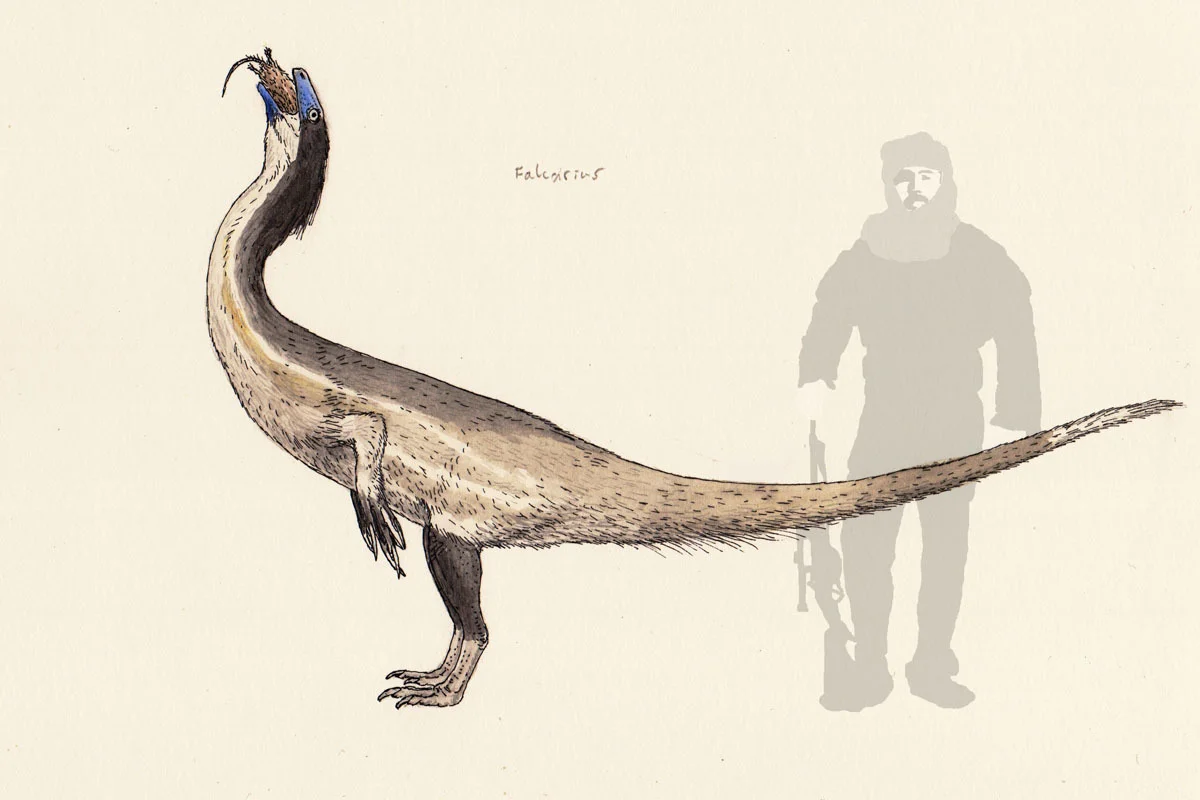
The earliest known true therizinosaur is Falcarius, from North America. This 3-foot long animal wasn’t very different from other medium-sized theropods, but already had some features that set it apart. It had a relatively small head at the end of a long neck, numerous small and leaf-shaped teeth ideal for feeding on vegetation, a hip structure that provided a slightly more vertical instead of horizontal posture, and robust forelimbs with long claws.
These traits mean that Falcarius likely fed on leaves and fruit keeping its head high off the ground to reach short trees, though recent analysis of its skull show that it still retained high bite forces characteristic of carnivores. So it could have supplemented its diet with eggs, small animals and carrion. In general it was similar to the ostrich-mimic dinosaurs except a bit slower, hinting at a close relationship.
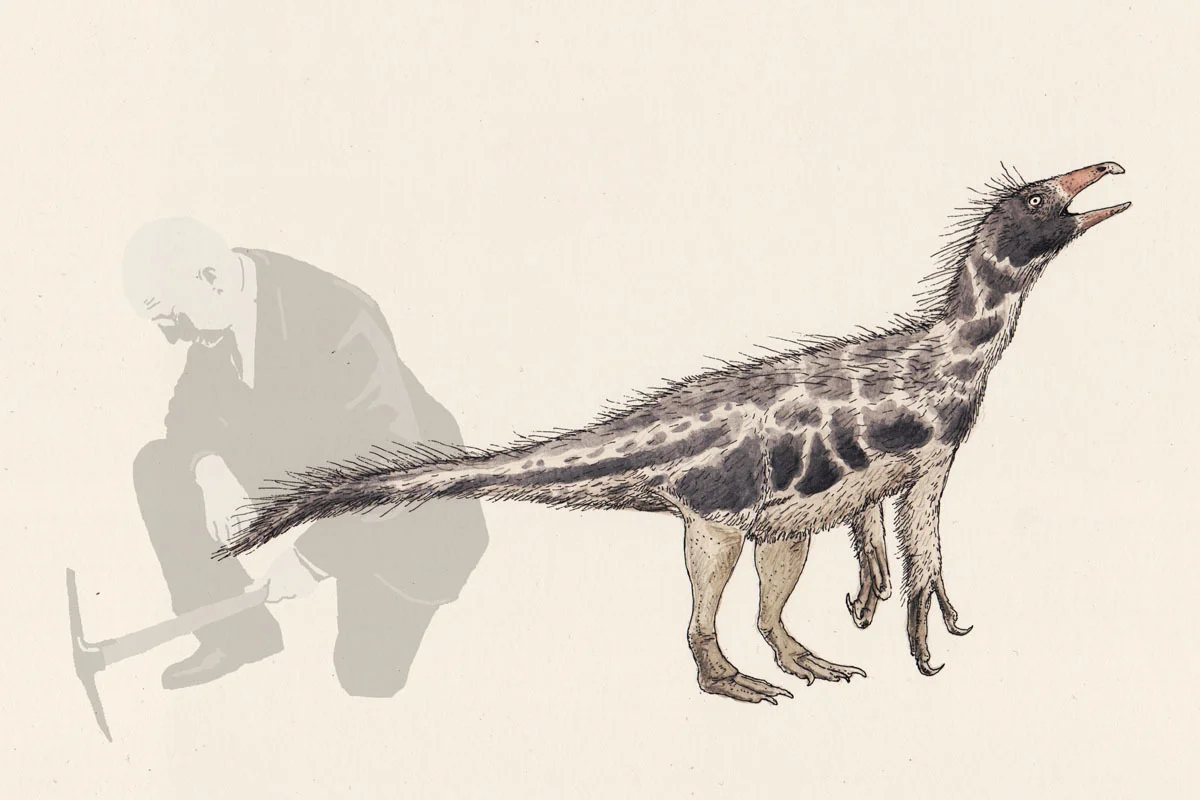
Another early therizinosaur was Beipiaosaurus, from China. This dinosaur was a groundbreaking discovery showing two distinct feather types. Both the downy fibers similar to a baby bird and long, stiff filmaments can be seen in its fossil. Reaching more than 7 feet in length, it was the biggest dinosaur conclusively known to have been feathered before the discovery of the T. rex relative Yutyrannus, also from China.
The shaggy Beipiaosaurus was stockier than Falcarius, with a modified pelvis structure allowing the gut to grow larger for digesting vegetation more efficiently. It had a beak in the front of its jaws and peg-like teeth in the back, probably protected by fleshy cheeks. Its forelimbs and claws were also bigger, and could have been used both for defense and for increasing its reach while feeding on leaves.
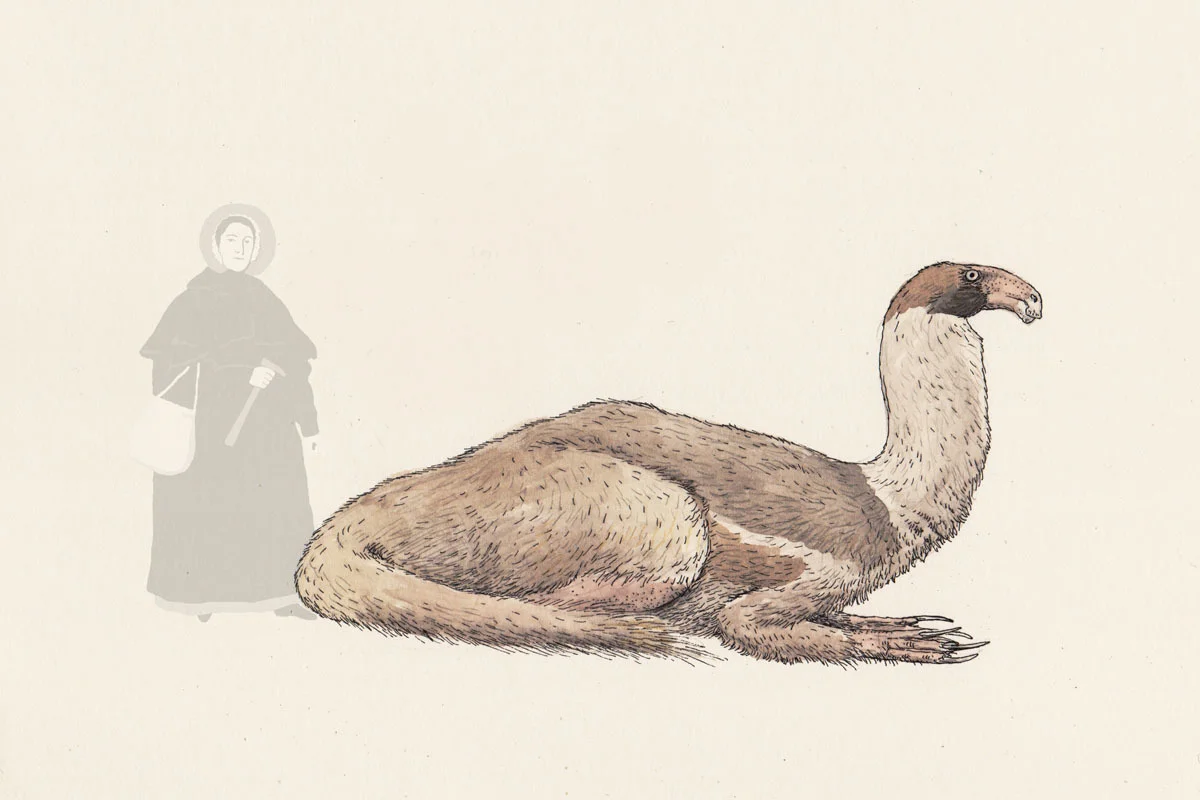
Another North American therizinosaur was Nothronychus, the “slothful claw”. With its quite upright posture, Nothronychus could stand at up to 12 feet tall and weigh about a ton, expanding on the tendency to grow bigger and stockier. This is thought to have been a consequence of an enlarged digestive system, since plant matter is much more difficult to break down into nutrients.