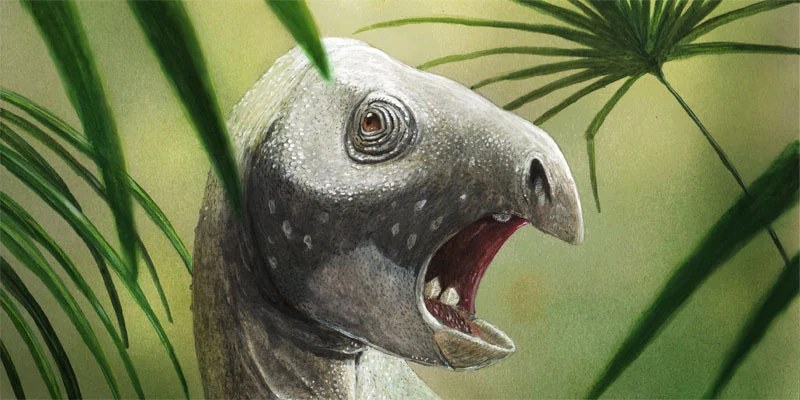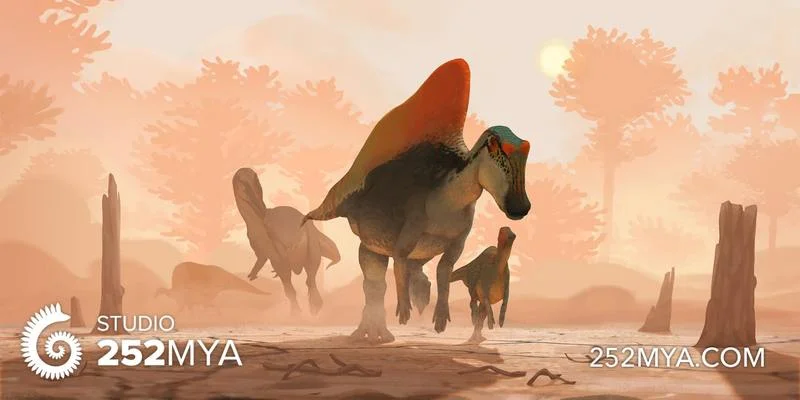

Since the 19th century, dinosaurs have long held a place of honor among fossil animals. Famous for their giant size and domination of the ecosystem during the Mesozoic, they are among the most familiar fossil animals to the general public. In addition to their great size and fearsome appearance, they are also excellent examples of evolution seen in the fossil record.
Not all fossil reptiles are dinosaurs. Instead, dinosaurs are a specific lineage of reptiles emerging in the middle of the Triassic Period about 245 million years ago. Other fossil reptiles from the Mesozoic such as pterosaurs and marine reptiles are incorrectly referred to as flying or swimming dinosaurs. Dinosaurs are made up of three major groups of mostly terrestrial reptiles with an upright gait.
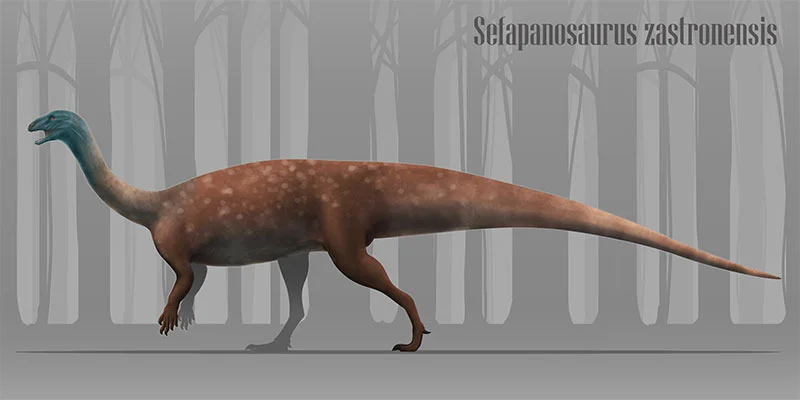
The giant, long-necked herbivores like Brontosaurus and Brachiosaurus and their smaller, bipedal ancestors are known as sauropodomorphs. The bipedal carnivores like Tyrannosaurus and Velociraptor, as well as living birds, are known as theropods. The final group of dinosaurs include the beaked bird-hipped herbivores like Stegosaurus, Triceratops, and Iguanodon, and are known as ornithischians.