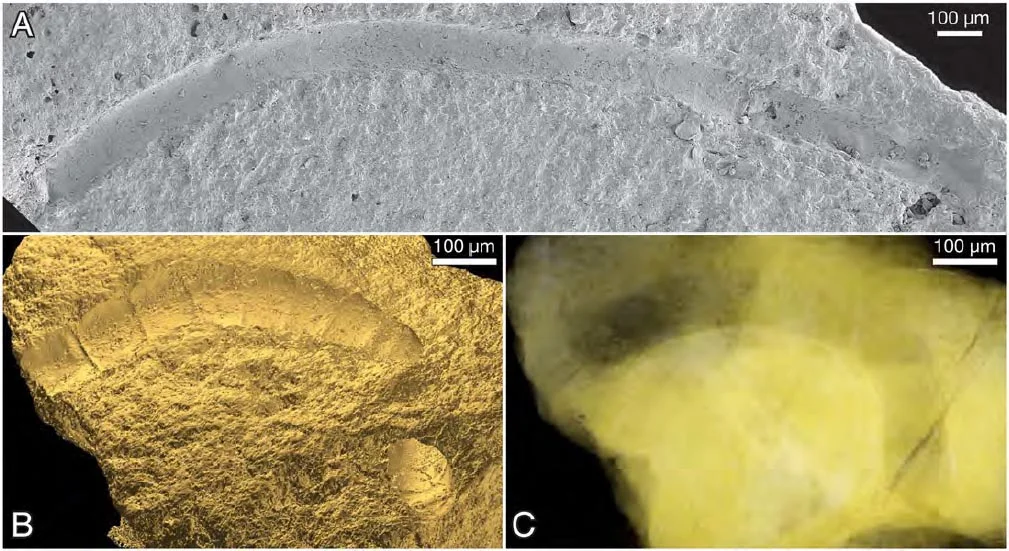

Paleontologist Stefan Bengtson and colleagues have discovered the fossilized remains of the oldest multicellular organisms yet known. The algal fossils were deposited in a shallow, equatorial sea in what is now central India. The researchers named three new species of organisms found among sedimentary structures. Known as stromatolites, these structures are layered mounds of sediment that are formed by photosynthetic bacteria.
The fossils are exquisitely preserved, and show external and internal details of individual cells. One species, Rafatazmia chikatrootensis, shows stacked cylindrical cells, forming hair-like filaments. Another, Ramathallus lobatus, shows a bumpy, lobed structure and may preserve reproductive organs. The third species, Denaricion mendax, shows stacks of disk-shaped cells, also forming filaments.