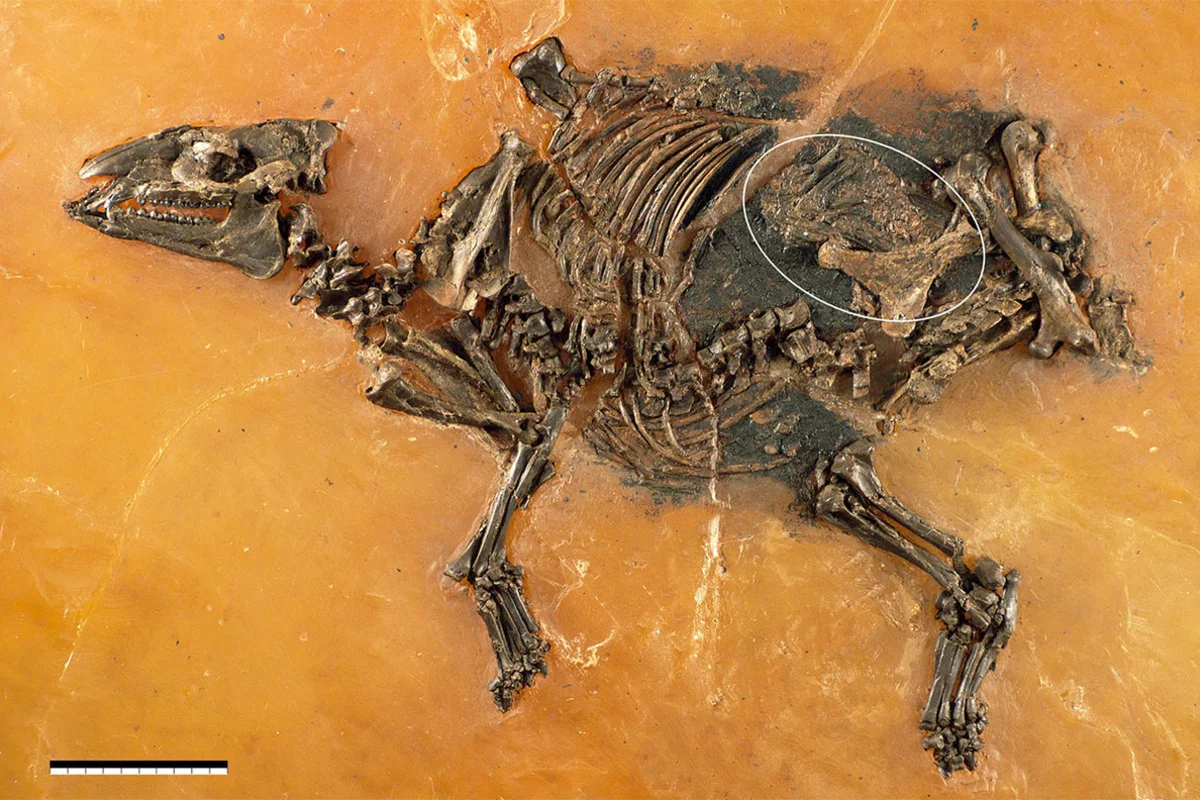

Paleontologists discovered the fossil in the Messel pit in Germany in 2000. It is the oldest and best preserved fossil fetus ever found.
The Messel pit is located in the southwest region of Germany, near the commercial and airport hub city of Frankfurt. It was initially a coal and oil shale mine but after so many scientific discoveries were made there it became a UNESCO World Heritage site in 1995. The rocks there formed around 48 million years ago during the Eocene Epoch in a lush and diverse subtropical environment dotted by lakes.
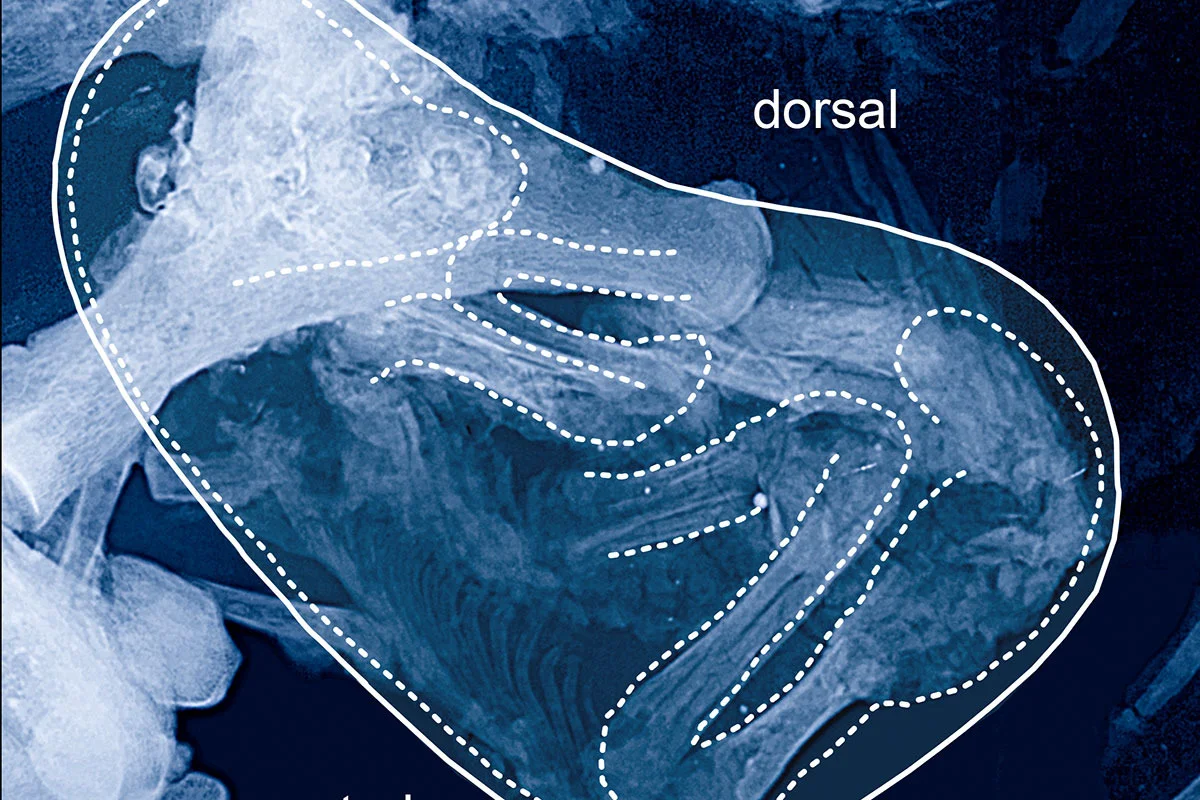
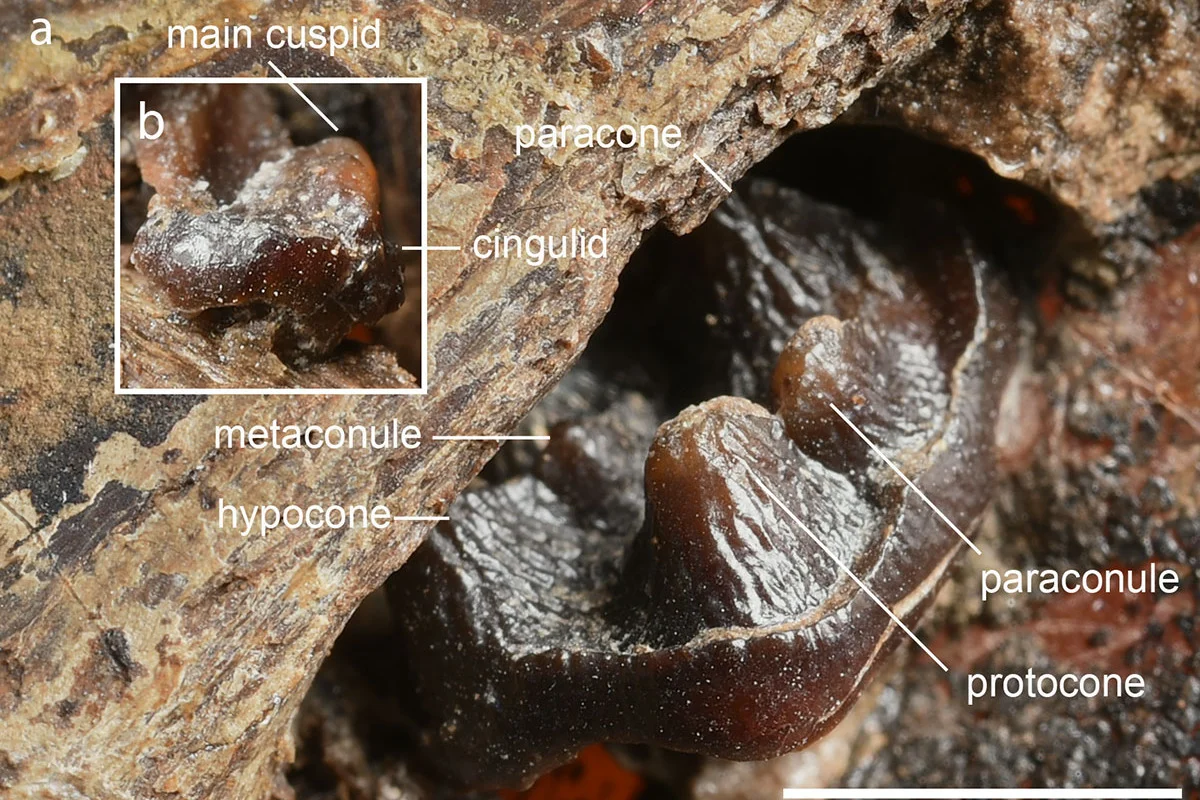
Extraordinary conditions in the Messel environment led to incredible preservation in almost all specimens recovered from the pit. For the Eurohippus fossil, scientists used X-rays and SEM (scanning electron microscopy) to reveal the rarely preserved soft tissues of the placenta.
As animals decay their soft tissues are consumed by bacteria. Researchers could see “bacterial lawns” or remains of bacteria in the form of the soft tissue they had been consuming (see photo in gallery).
Almost all fetal bones are present and connected, except for the skull, which is crushed.
Complications with pregnancy did not seem to be the cause of death, as the fetus wasn’t yet to full term but was fairly close based on gestation length estimates.
Eurohippus was much smaller than modern horses at barely one foot tall. Instead of hooves they had several small nail-like hooflets. They were herbivorous and lived in the lush forests of the Eocene.
Original research is published in PLOS ONE.