
What can cause such enormous changes? And if these changes can happen naturally, why don’t they happen all the time? What can ancient history tell us about what is happening to the world right now? Let’s take a journey through over two billion years of Earth’s history and examine the greatest shifts in climate. Each event is unique, but common elements stand out from which we can take lessons. Along the way, we’ll see how changes in the environment affect the living world, and how even tiny and harmless living things can have a great impact on the world.
The Huronian Ice Age
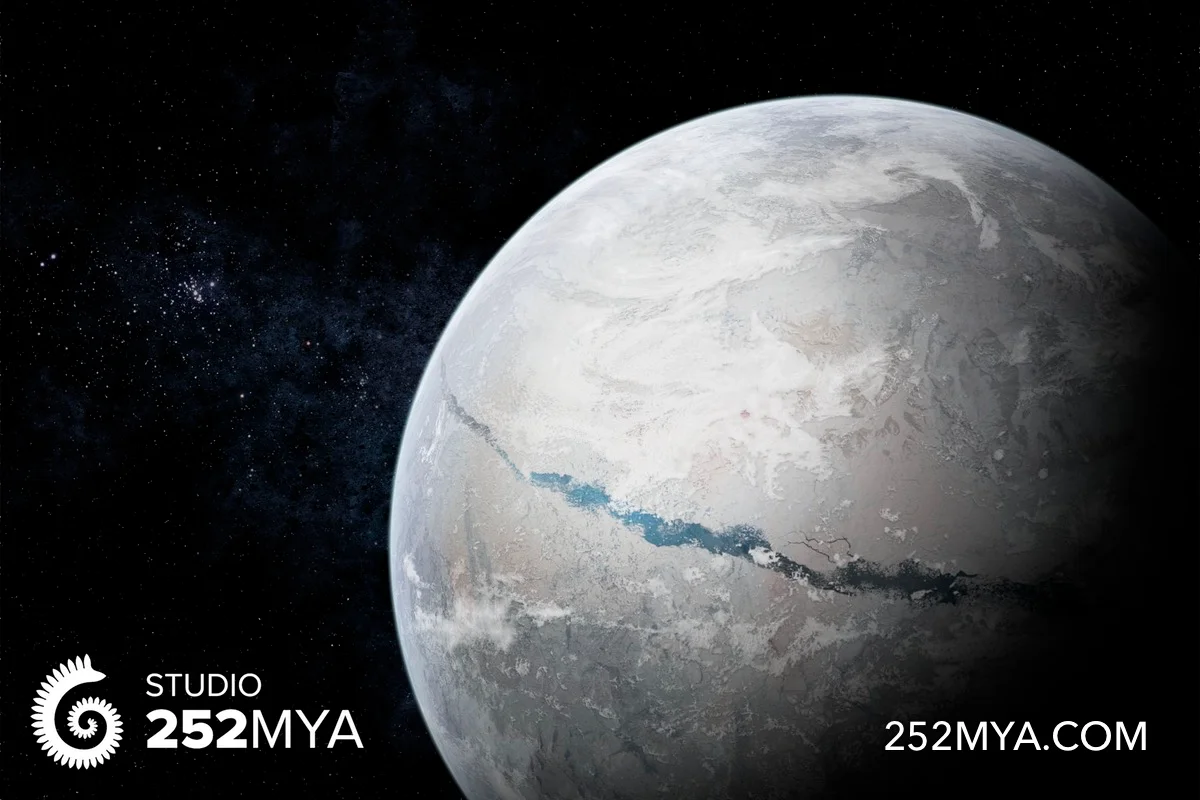
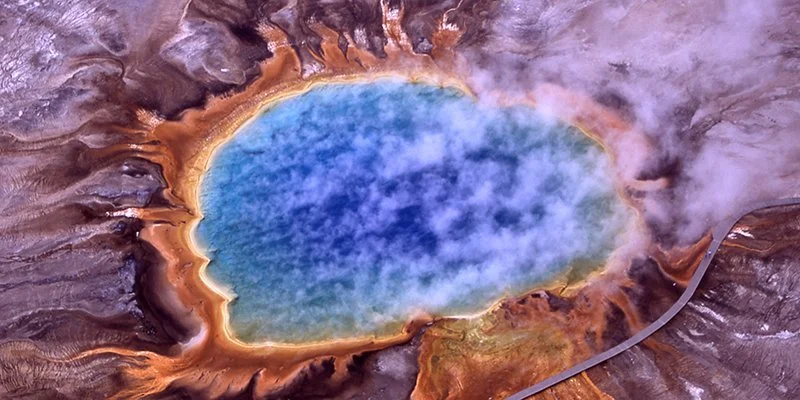
Our story starts in a hot world, 2.5 billion years ago. Even the poles rarely froze even in dark winter nights. The atmosphere had high concentrations of methane (CH4) and carbon dioxide (CO2), both are greenhouse gases. This thick atmosphere kept the Earth’s heat from leaking into space. Life was microscopic, single-celled, and primitive. One lineage of bacteria living in shallow water evolved the ability to use sunlight to absorb carbon dioxide and turn it into chemical energy, producing free oxygen as a byproduct, a process called photosynthesis.
This was the Great Oxygenation Event. The result was nothing short of complete mayhem. The oxygen reacted with atmospheric methane, forming carbon dioxide and water. This additional carbon dioxide was used by photosynthetic organisms to produce more oxygen. This coincided with the creation of new continental crust that underwent chemical weathering, pulling even more carbon dioxide from the air. Lastly, the sun may have entered a dim phase, shining less warming rays at the planet. Taken together, these events worked like ripping the blankets off in the middle of the night.
Most life forms that didn’t die from freezing were killed by oxygen poisoning. Those that survived adapted to tolerate or even make use of free atmospheric oxygen. For two hundred million years, this ice age, dubbed the Huronian, held the world in its icy grip. Ice-covered rock doesn’t absorb carbon dioxide, eventually causing greenhouse gasses to build up and started melting the ice sheets. After the Huronian Ice Age ended, the Earth was swelteringly hot a billion years with little or no ice even in the coldest places. The warm seas host an ever-increasing diversity of life.