
Adapted excerpt from Feathers: The Evolution of a Natural Miracle by Thor Hanson. Copyright © 2012. Available from Basic Books, an imprint of Perseus Books, a division of PBG Publishing, LLC, a subsidiary of Hachette Book Group, Inc.
The next time you chance upon a dog show on TV, or tour the local animal shelter, remember that all those myriad varieties, from schnauzers to setters, developed quite recently through selective breeding. Every dog in the world descends from gray wolves first domesticated in central Asia between fifteen and thirty thousand years ago. Since then they have traveled with people to every continent, and countless breeds have come and gone. The Pekingese dates to the courts of imperial China more than two thousand years ago, the paisley terrier became common in Victorian England but died out in the 1920s, while the now popular labradoodle was developed in Australia fewer than thirty years ago. Meanwhile, the gray wolf persists in the wild in its original, unaltered form. To future paleontologists, dealing with only a few scattered fossils, this will be an unholy mess to make sense of. They would be totally incorrect, for example, to assume that the Empress Dowager’s Pekingese was the ancestor of a modern wolf, simply because it existed earlier in time. They would be right, however, to conclude that all dog breeds and the modern wolf share a common ancestor somewhere earlier in the canine lineage.
Though this argument makes a sound defense, proponents of the theropod-bird story still longed to find a feathered dinosaur older than Archaeopteryx, one that would put the temporal paradox to rest once and for all. “If you want certain fossils, you have to prospect in sediments of the right age,” paleontologist Xu Xing explained simply, as if anyone with a shovel and a geologic map could replicate his most dramatic discovery to date.
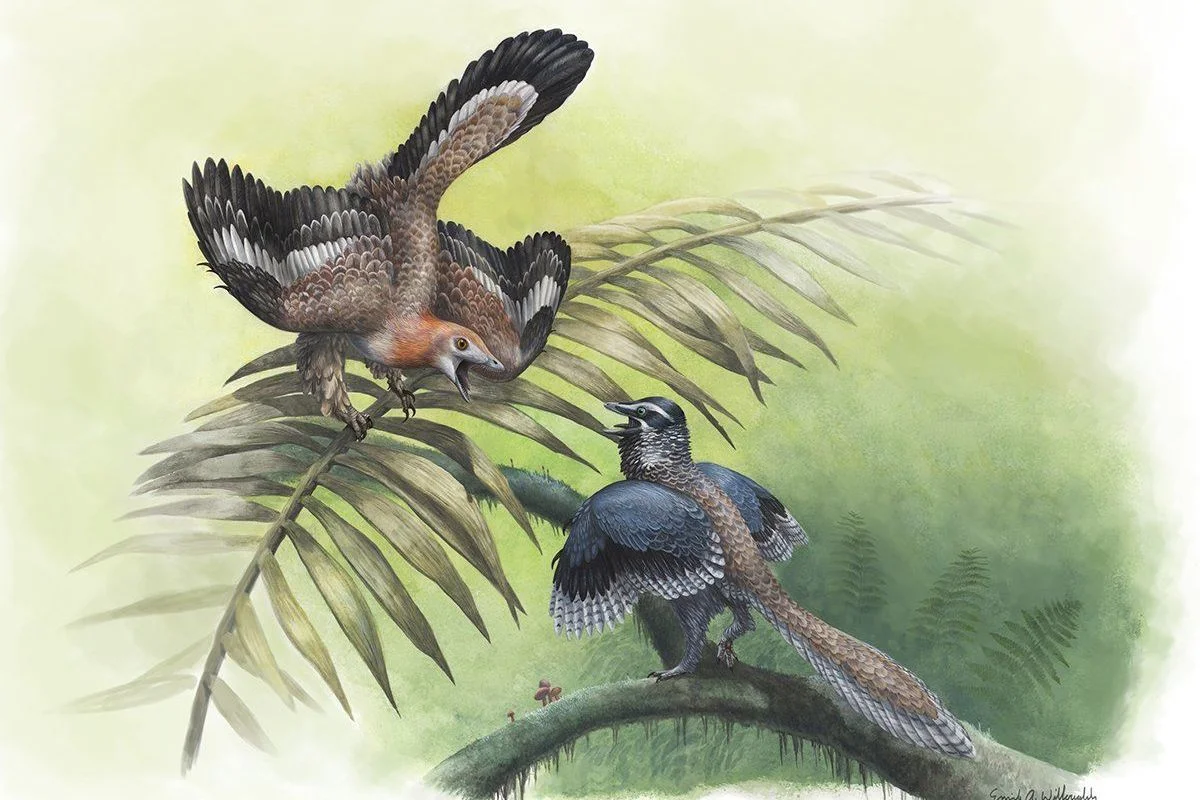
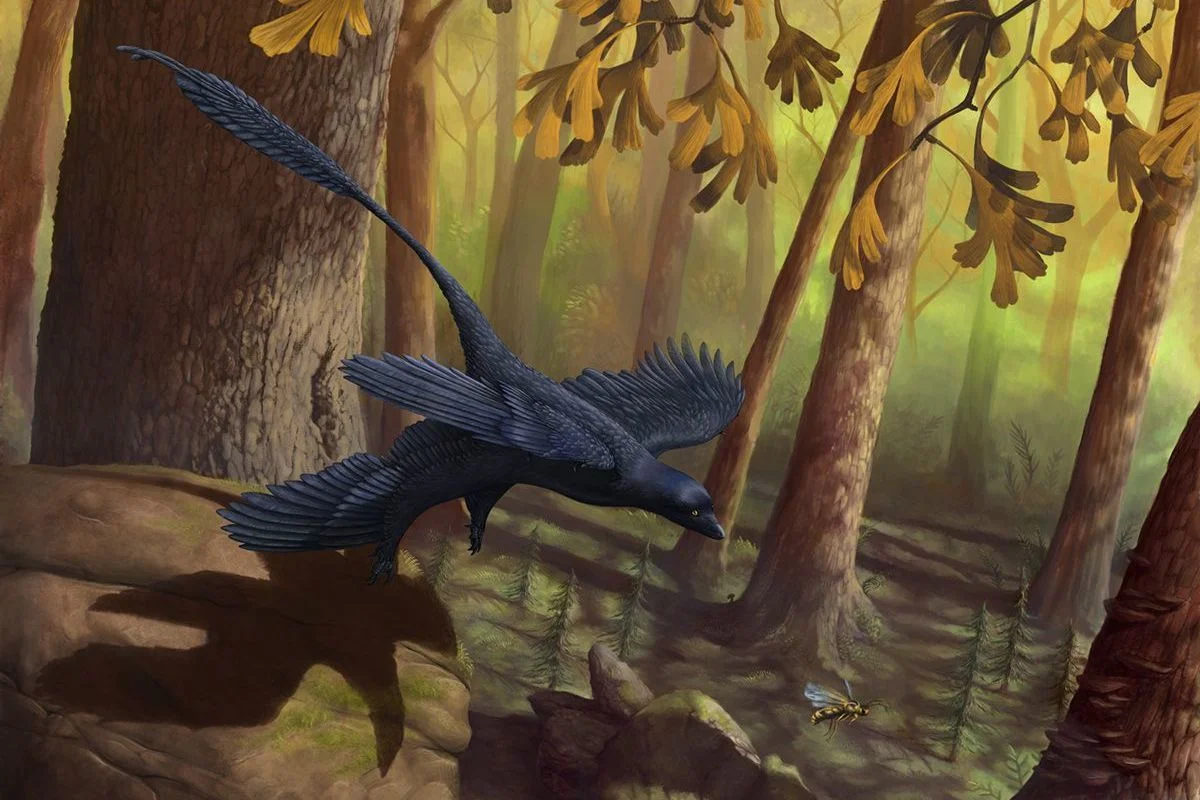
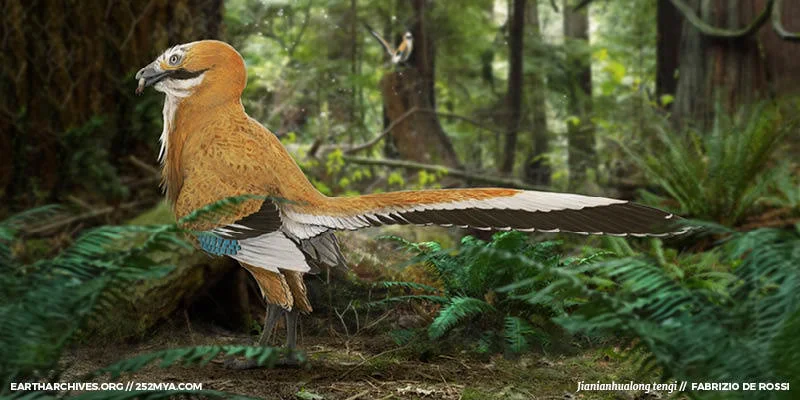
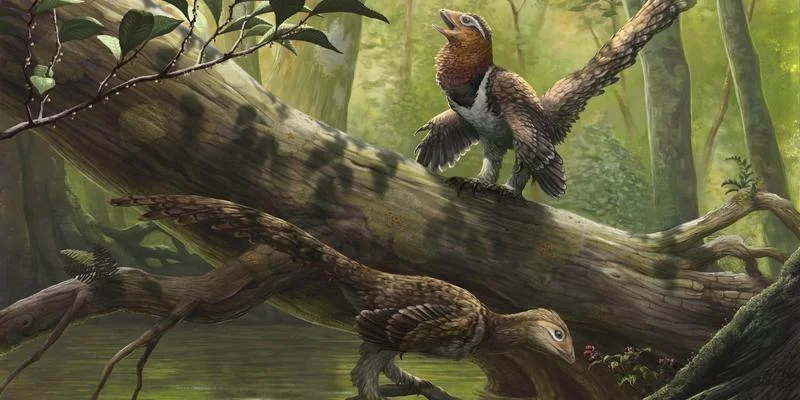
Following his own advice, Xu and his team found Anchiornis huxleyi by delving below the Yixian shales to the little-known Jurassic rocks of the Haifangou Formation. Like Archaeopteryx, Anchiornis sported fully feathered wings and may have been capable of gliding flight, but this creature lived more than 160 million years ago, at least 10 million years before the “first bird.” It was a small dinosaur, only a foot long, and resembled Microraptor, with downy body feathers as well as vaned feathers on wings, legs, and feet. Anchiornis also sported a distinct feathered head crest, not unlike a modern Cardinal or a Steller’s Jay. Named in honor of Thomas Huxley, this fossil was presented by Xu at the 2009 Society of Vertebrate Paleontology meeting, neatly tying up one of the last serious criticisms of the theropod-bird link that Huxley suggested nearly 150 years before.
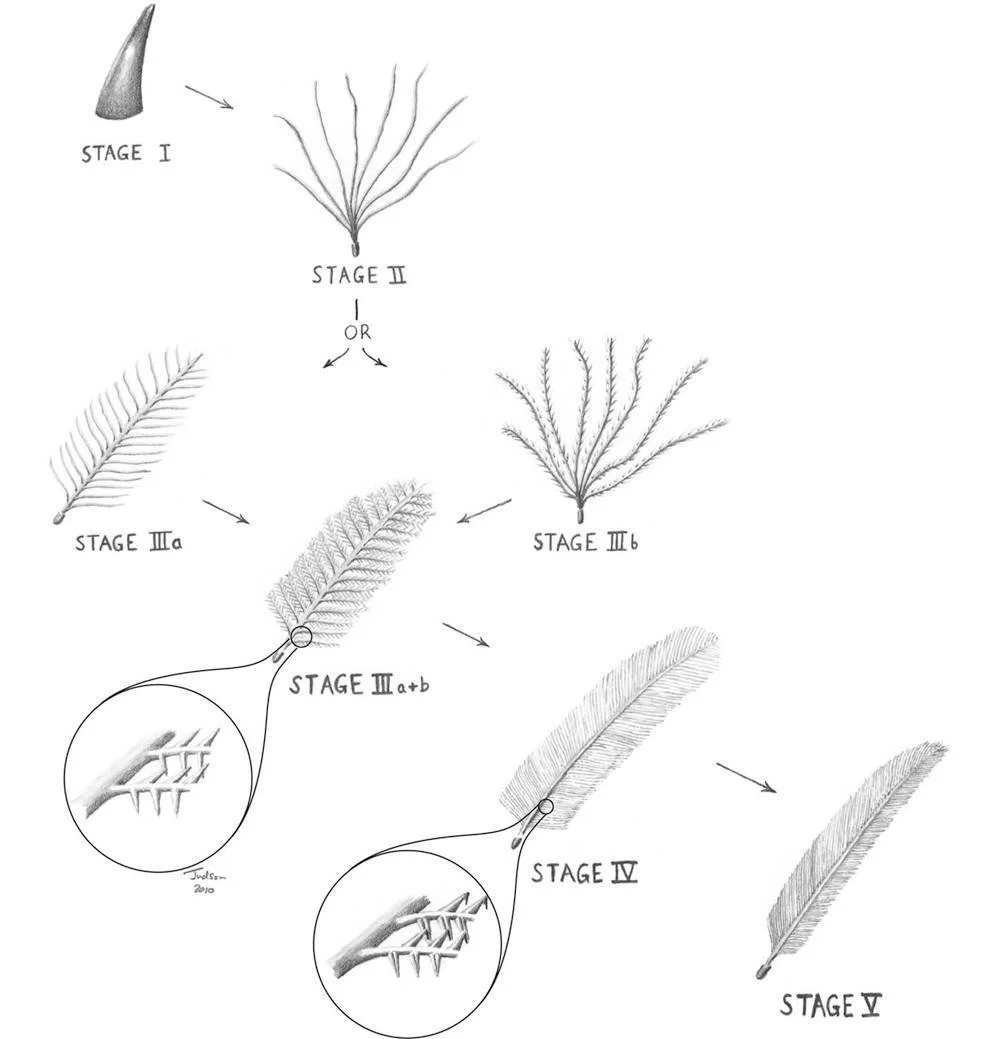
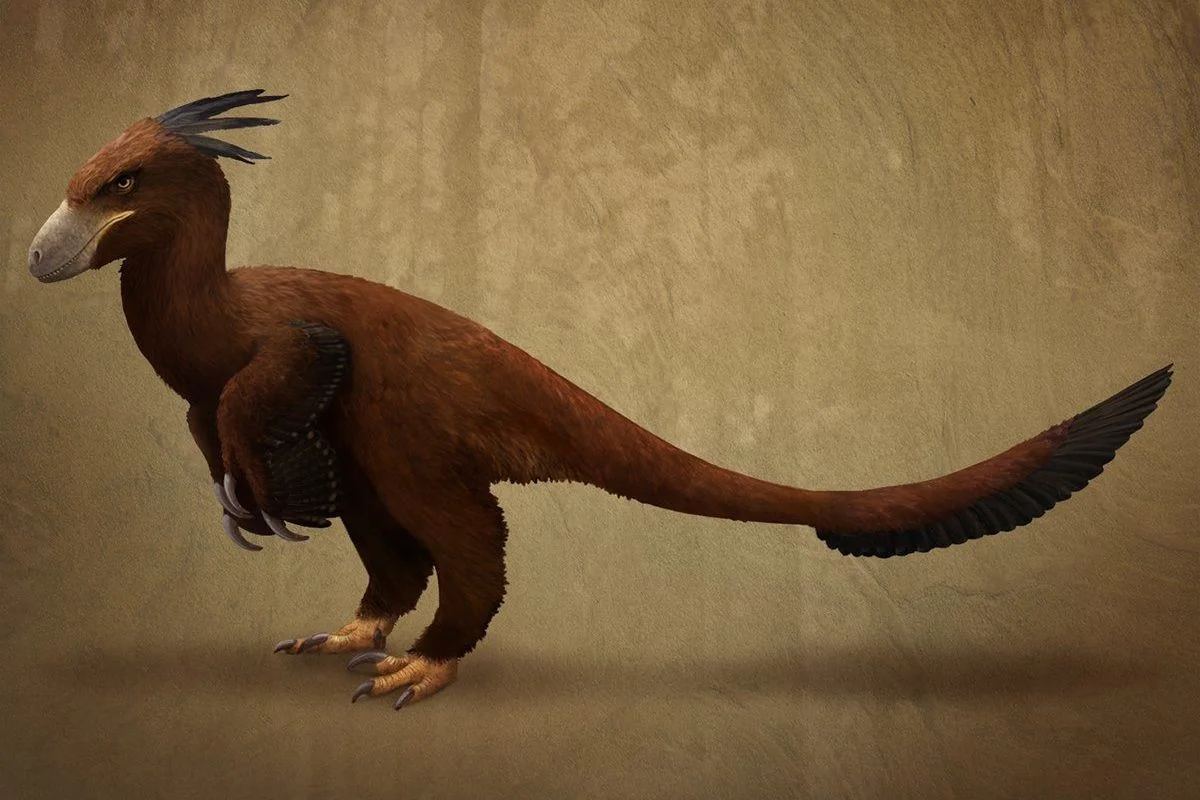
Taken together, these feathered dinosaurs (and the twenty other species uncovered to date) make a pretty compelling case for Richard Prum’s developmental theory of feather evolution, which lays out five evolutionary steps that must have occurred, in order, to produce the complex structure of a modern plume. They all bear Stage II filaments; Beipiaosaurus has Stage I quills. Caudipteryx covers Stage III (and possibly IV), while Microraptor and Anchiornis take care of Stages IV and V. “We can’t see everything,” Prum admits. “Barbules are pretty small to fossilize, and it’s hard to tell when things are hollow. But overall I’m pretty pleased with what the fossil evidence tells us.”